
Well Chlorination
Download a print-friendly PDF of these instructions.
Shocking a Well
The first step to solve a Bacteria or E. coli problem is to “shock” your well with bleach or chlorine tablets. If attempting to chlorinate the well yourself, please carefully follow the directions below. If you would like us to chlorinate the well for you, please call our office at (207) 594-4947 to schedule an appointment.
IMPORTANT
Most water treatment equipment can be damaged by high levels of chlorine. To be safe, water treatment equipment should be put in bypass until the chlorine has run through.
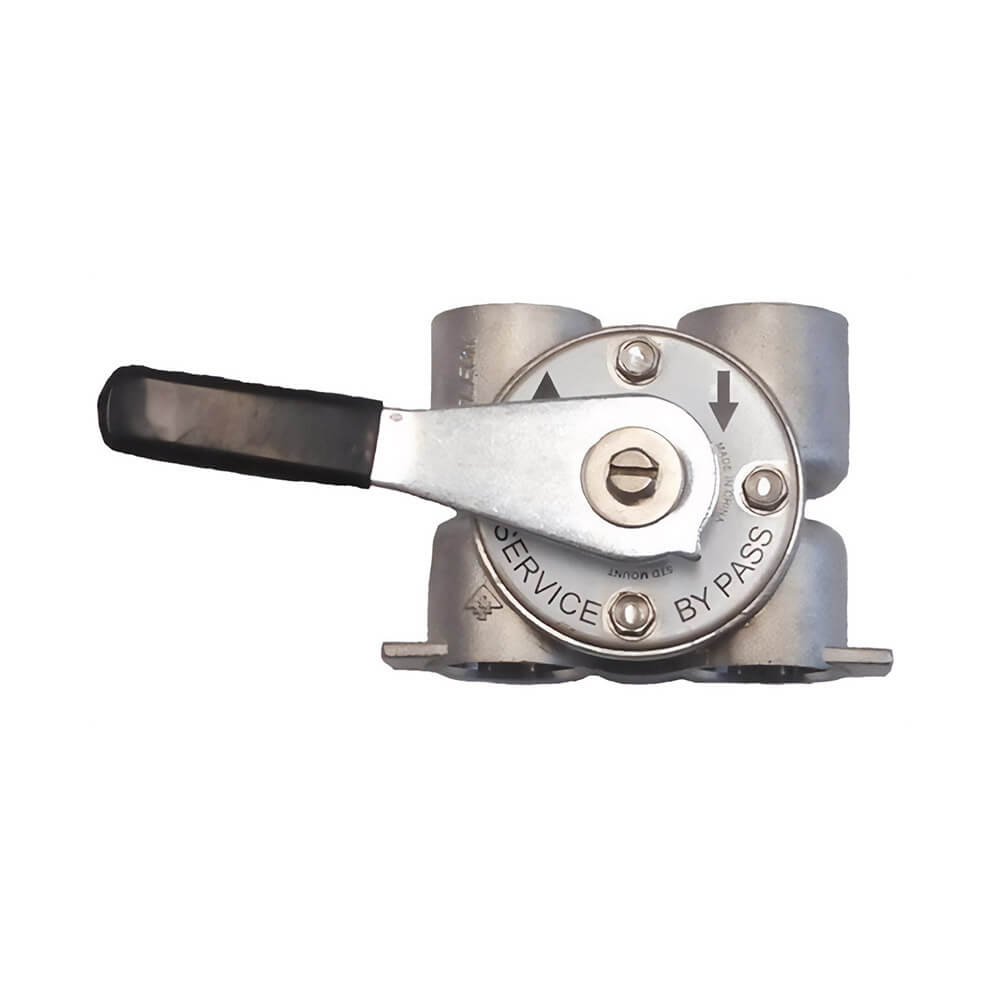
Example of a stainless steel bypass valve.
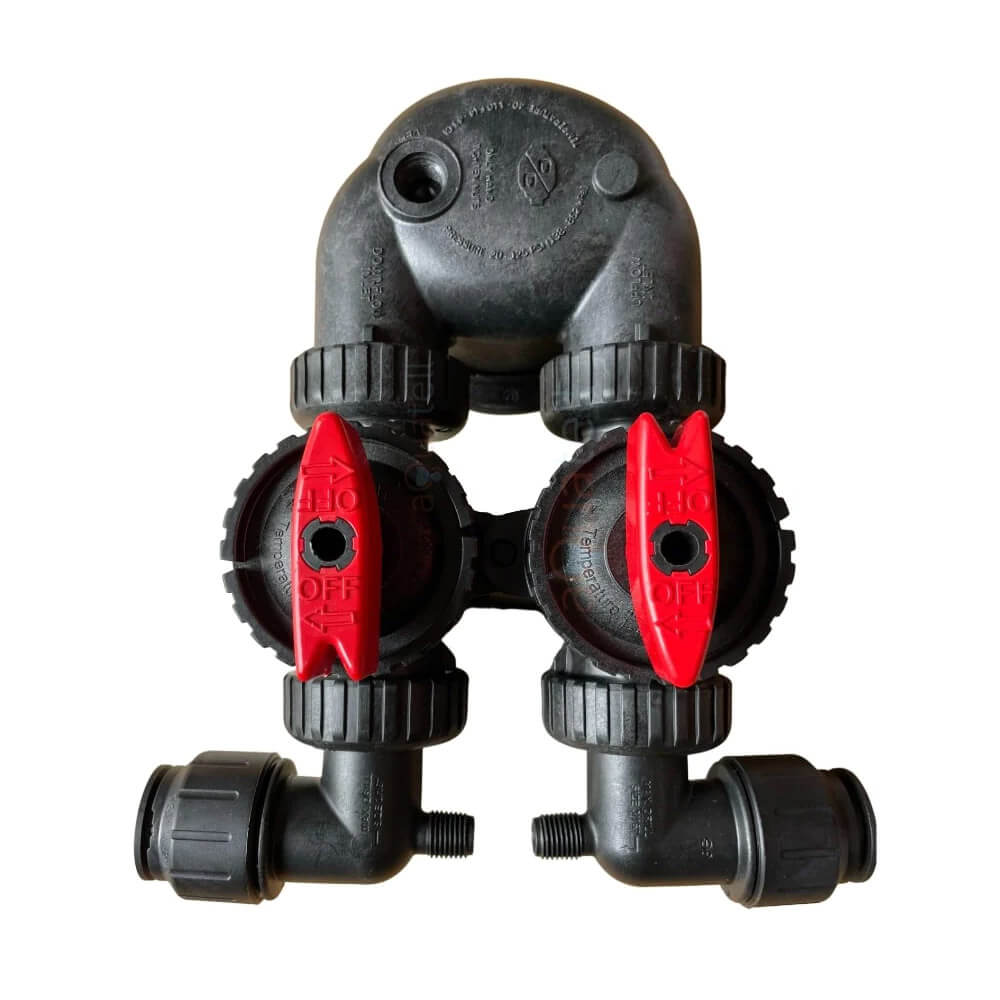
Example of a plastic bypass valve.
If you have any questions, please call the office.
- Turn well power off at circuit breaker.
- Remove the well cap and pour the proper amount of bleach into the well. Use about 3 quarts of bleach for every 100 ft. of well.
- Turn back on the well power at the circuit breaker.
- Connect a garden hose to a nearby faucet and wash down the inside of the well casing. Leave the hose in the well to recirculate the water for a minimum of 1 hour. (2–3 hours is preferable)
- Open each indoor faucet one by one and let the water run until a strong chlorine odor is detected. If a strong odor is not detected, you may need to add additional chlorine. This is the process of getting bleach into all the plumbing lines.
- Let the water stand in the plumbing of the house for a minimum of 12–24 hours. Try not to use hot water—this will put the bleach into your hot water source of supply.
- Try to avoid doing laundry, and cooking with the bleach in your well water.
- After the 24 hours of letting the bleach rest in the well water, begin to flush the pipes of the remaining chlorine. Start by turning on outside faucets and running the water on the ground away from your house until the chlorine smell dissipates. After you can no longer smell chlorine, go turn on your indoor faucets and finish flushing the system of the remaining chlorine.
- Test to confirm the bleach is out of the drinking water.
- Turn back on the water treatment filters.
- After 1–2 weeks, have the water retested for bacteria. If Bacteria or e-Coli are still present, you may want to install an Ultraviolet Light for continuous disinfection.
Be careful when handling strong chlorine solutions. Wear rubber gloves, goggles, and an apron. If any chlorine gets on your skin, flush immediately with clean water.
Never mix chlorine with any other cleaning agents or ammonia; this can give off toxic gasses.
Do not use fresh scent bleach or other special laundry products. Use regular bleach.